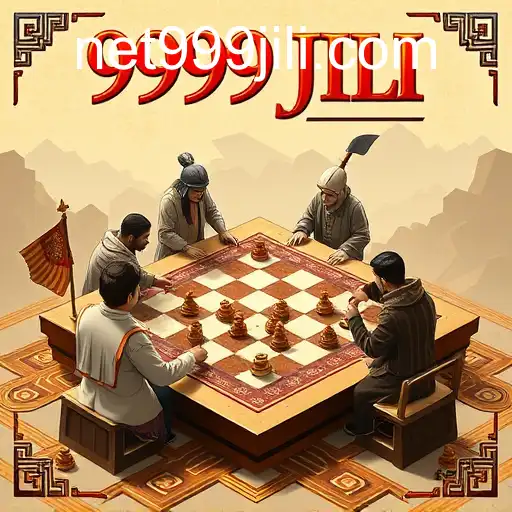
The Fascinating World of Board Games
Board games have been an integral part of human culture for thousands of years, offering a medium through which people can connect, strategize, and learn. From ancient games like Chess, known for its mental challenges, to modern titles that push creative boundaries, the evolution of board games is a testament to the persistent human desire for entertainment and social interaction. Among the growing catalog of games, 999JILI has started to capture interest, weaving complex strategies with engaging gameplay.
The Historical Journey of Board Games
The history of board games stretches back to ancient civilizations. Games like Senet, originating from Egypt over 5,000 years ago, are among the oldest known. They served not just as pastimes but as simulations of real-world situations, teaching players valuable lessons. As societies evolved, so did the games, reflecting cultural values and social structures.
The Middle Ages heralded games such as Chess and Go, which became hugely popular due to their challenging nature and strategic depth. These games primarily served as intellectual exercises for the elite, often doubling up as pedagogical tools for strategic thinking and decision-making.
999JILI: A Modern Twist in Board Gaming
Among the new wave of board games, 999JILI stands out with its innovative gameplay and intricate design, attracting both casual players and enthusiasts. It embodies the modern trend of board gaming where engagement and replayability are at the forefront. With various elements to keep the game fresh each session, it provides a dynamic experience often missing in traditional games.
The allure of 999JILI lies in its hybrid structure, combining cooperative and competitive elements, keeping players on their toes. This hybrid nature means each game is versatile, offering a unique narrative, thus broadening its appeal amongst diverse demographics.
The Evolution and Varieties of Board Games
The 20th century witnessed a transformation in board gaming, with the introduction of family-centric games like Monopoly and Scrabble. These became household staples due to their accessibility and straightforward mechanics. As educational tools, they helped sharpen mathematical skills and vocabulary, boosting their popularity even further.
However, the 21st century sparked a renaissance in board games often termed the "Golden Age". Titles like 999JILI exemplify this period, featuring a renaissance in game design—imbuing mechanics with deeper narratives and strategies. Today's board games come in myriad forms: strategic, cooperative, legacy, and abstract, each targeting different aspects of player engagement.
Role-playing games like Dungeons & Dragons have also influenced board gaming, introducing role-based play where winning isn't always the sole objective. This diversification caters to both competitive and narrative-driven players, creating shared experiences that are as much about storytelling as gaming.
The Social and Educational Impact of Board Games
Board games are not only a source of fun but also significant in fostering social skills. Sitting around a board fosters interaction, negotiation, and collaboration, key components in building interpersonal relationships. Games like 999JILI encourage teamwork, prompting players to communicate and strategize together, making them excellent tools for family and team-building environments.
Moreover, educational board games are gaining traction, with schools integrating play-based learning into curriculums. These games engage students in a manner that traditional methods might not, helping them grasp concepts faster, actively participating in problem-solving and critical thinking exercises.
The Future of Board Games: Technology and Innovation
As technology progresses, so does the potential for board games. Modern games often integrate elements of digital interaction, bringing together the tactile joy of traditional gaming with interactive digital enhancements. For instance, apps complement conventional board game setups by providing digital storytelling, rule management, and even virtual player interactions.
In the realm of innovation, 999JILI continues to push boundaries by often merging traditional play with digital applications, leading to hybrid experiences that go beyond physical limitations. This interplay offers a bridge between tech-savvy generations and classic board game enthusiasts.
Considering the steady rise in interest for board games over the past decade, the focus remains on inclusive design and universal accessibility. Game developers are increasingly attentive to diversity and representation, ensuring that games resonate across age groups and cultures.
Conclusion
The journey of board games from ancient relics to modern-day masterpieces shows no signs of slowing down. With games like 999JILI, the landscape continues to evolve, offering something for everyone—from solitude seekers to social butterflies. Board games remain a beloved fixture in the world of entertainment, continuously surprising players with new adventures and endless fun.